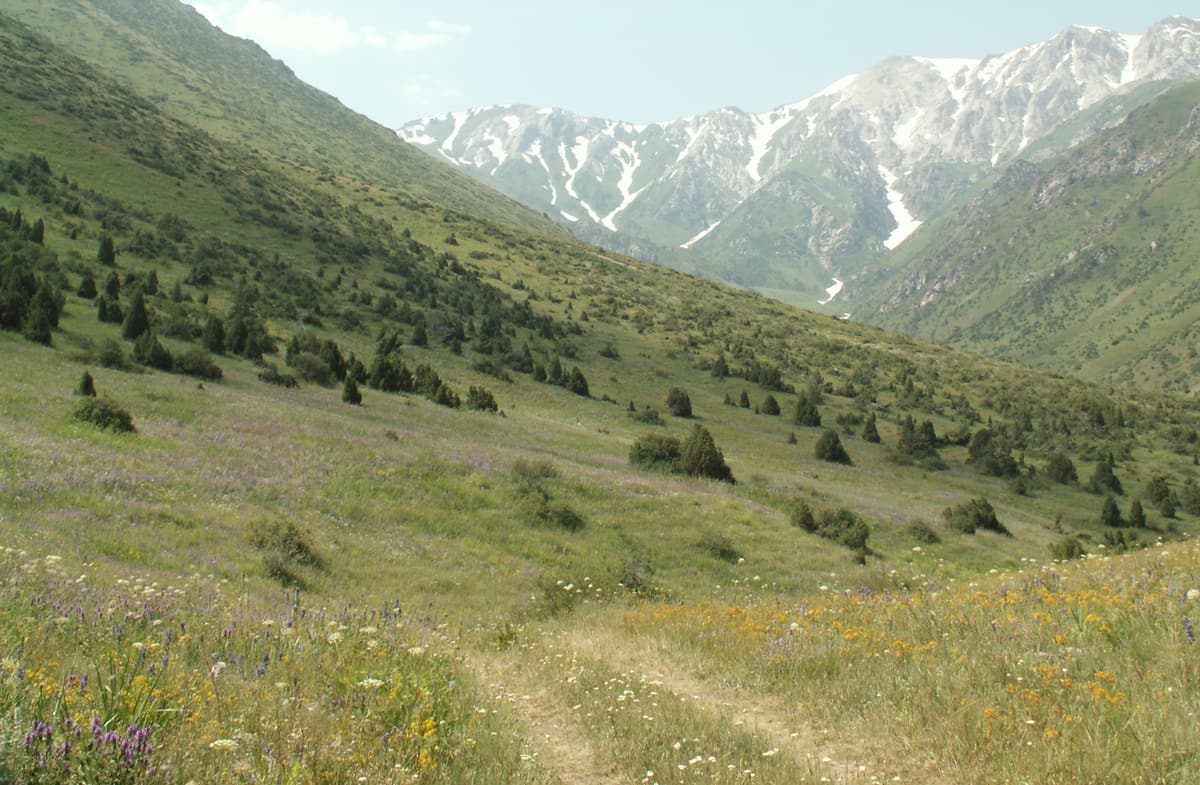
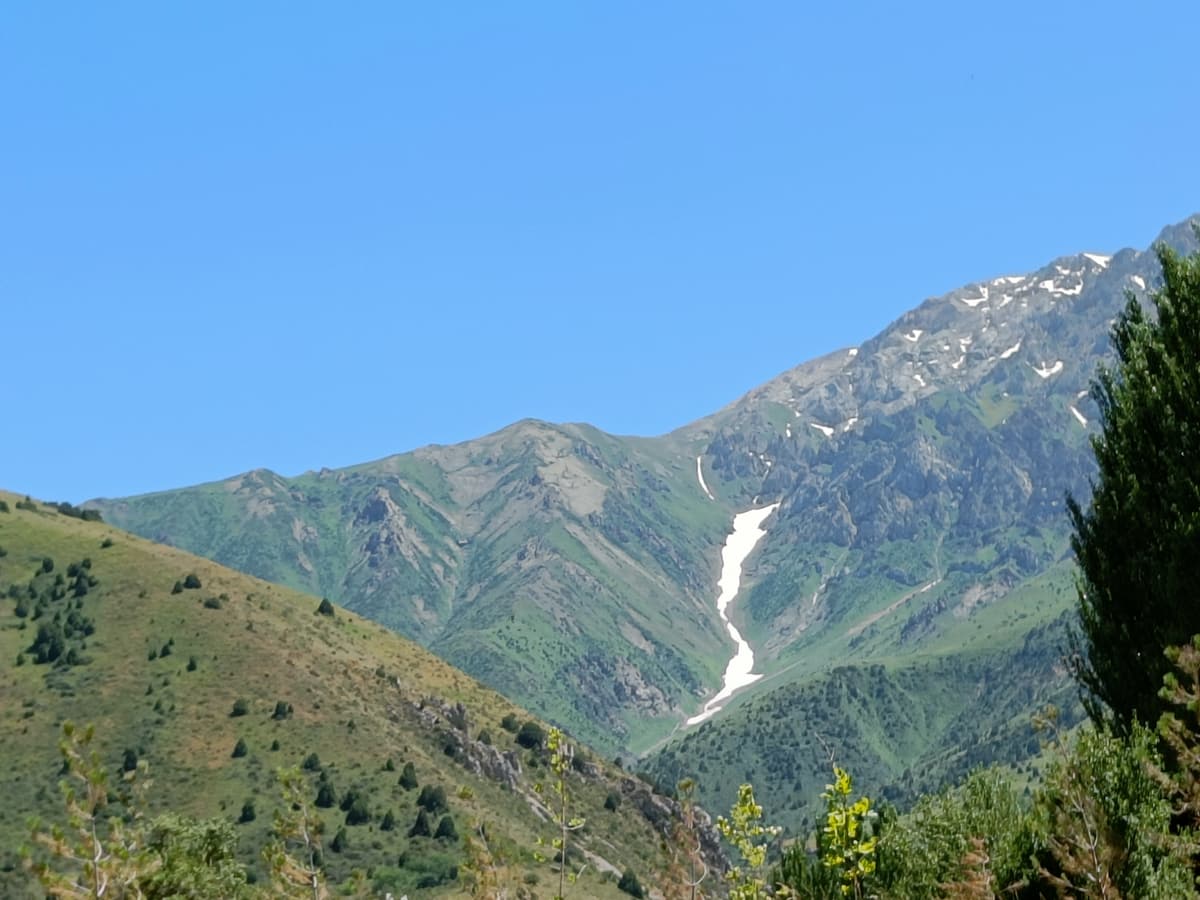
Founded in 1926, Aksu-Zhabagly is the oldest nature reserve in Central Asia. It protects the north-western end of the Talas Alatau, part of the Western Tian Shan, from semi-desert foothills at about 1,000 metres up through juniper forest and alpine meadow to glaciers and peaks above 4,000 metres. In 2016 it became part of the UNESCO World Heritage Site "Western Tien-Shan".
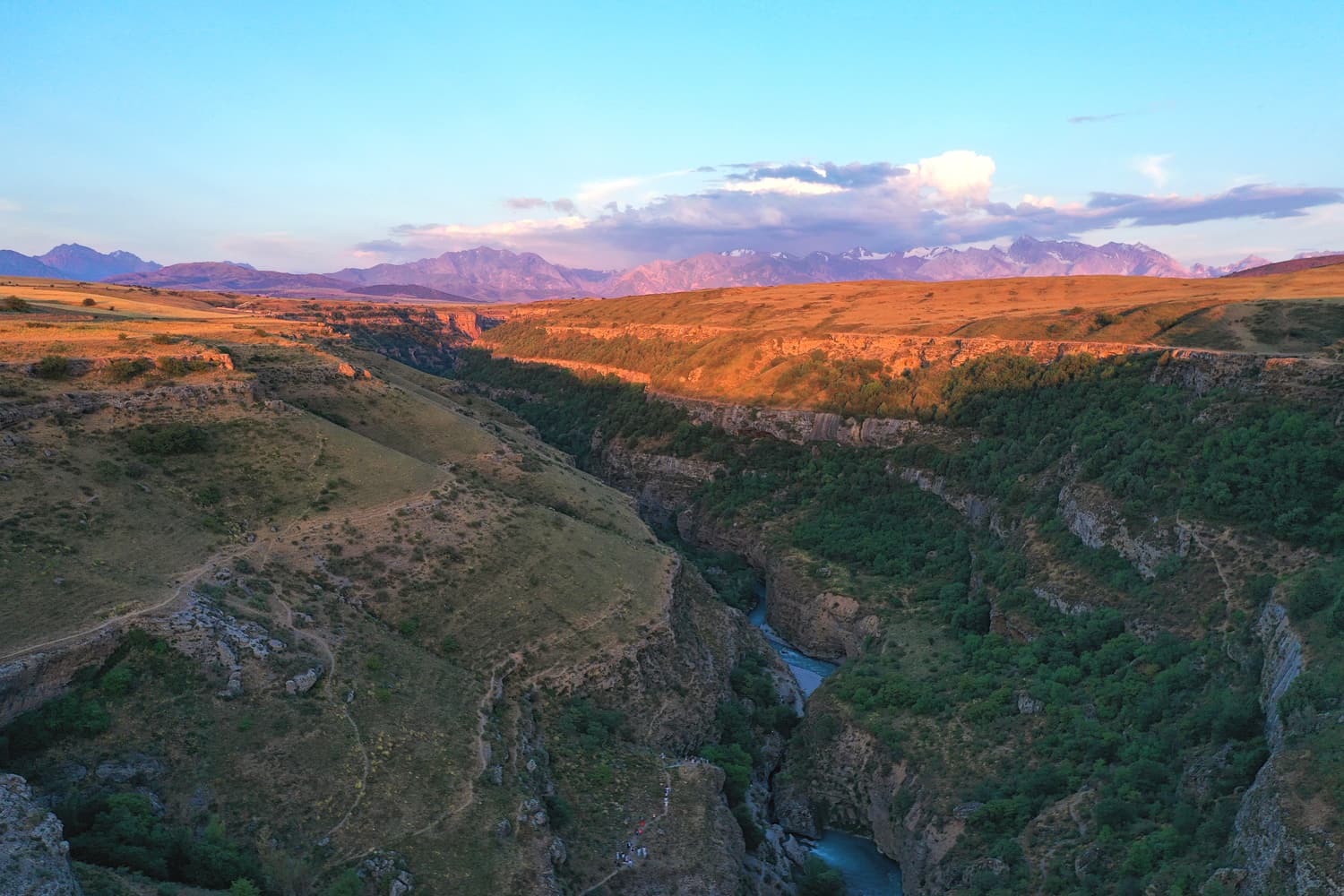
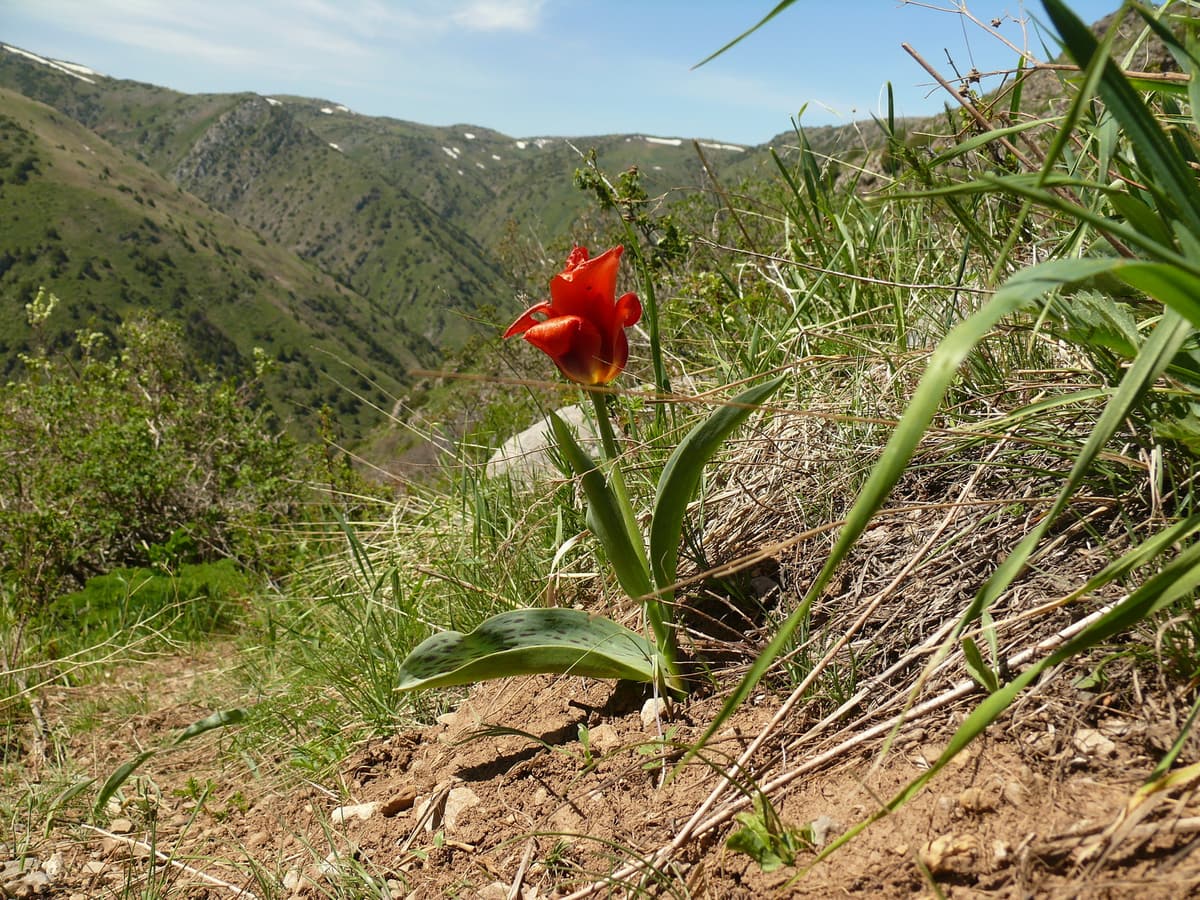
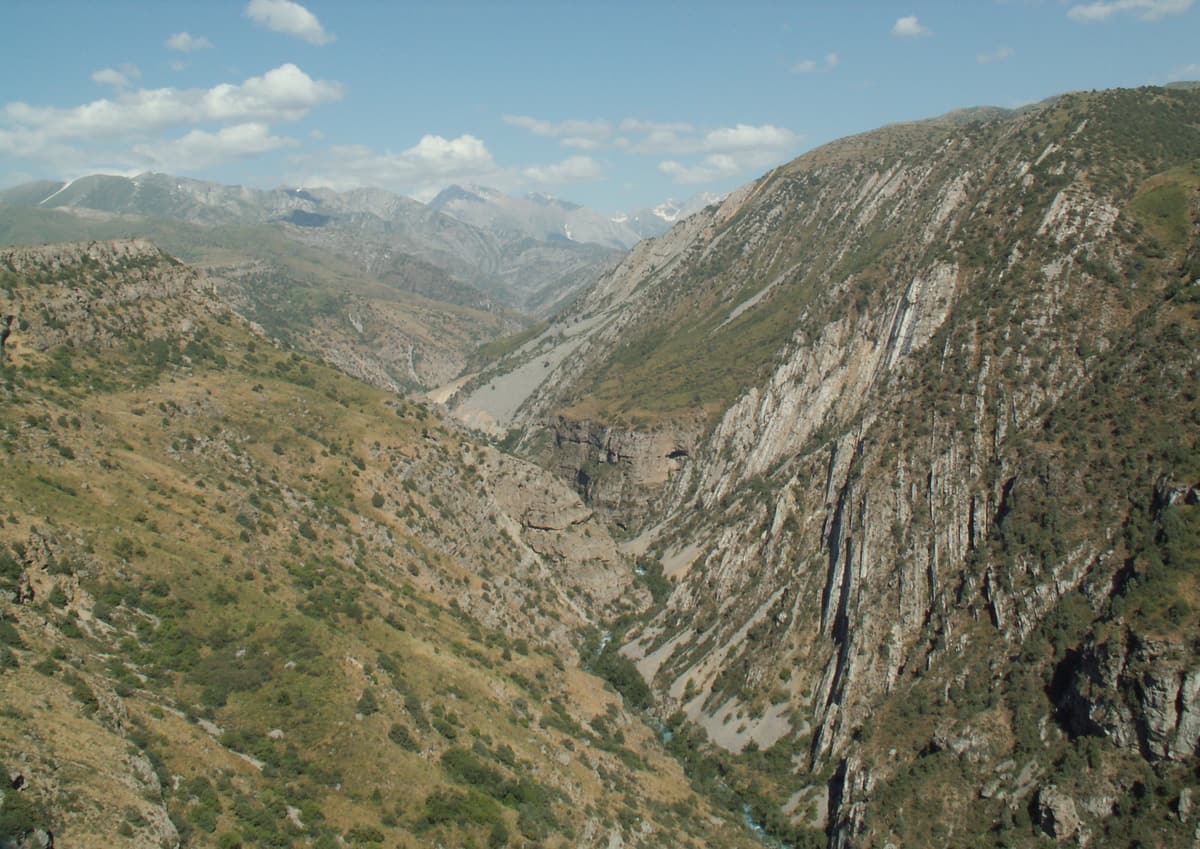
The reserve is best known for flowers. This region is one of the homelands of the garden tulip, and from mid-April into May the slopes are scattered with scarlet Greig’s tulips and cream-and-red Kaufmann’s tulips. It is also serious wildlife country — Siberian ibex, argali, Tien Shan brown bear and, rarely seen, snow leopard — and a magnet for birdwatchers. The showpiece landscape is the Aksu canyon, a gorge several hundred metres deep cut by the milky-white Aksu river.
Top things to do at Aksu-Zhabagly Nature Reserve
Look into the Aksu canyon
A rough track leads to viewpoints on the canyon rim, where the ground drops away abruptly to the river far below. It is usually reached by 4×4 from Zhabagly village, with a ranger. Hikers can descend a steep path to the water.
Find the tulips
The bloom moves uphill as spring advances: foothills in mid-April, higher meadows into May and sometimes early June. Local guides know which slopes are flowering in a given week. Picking is strictly forbidden — both species are protected.
Hike or ride in the Zhabagly valley
Classic day routes follow the Zhabagly river up to Kshi-Kaindy and Ulken-Kaindy, with waterfalls and juniper stands. Horses can be hired through village guesthouses, and longer treks reach high-altitude petroglyphs.
Stay in a village guesthouse
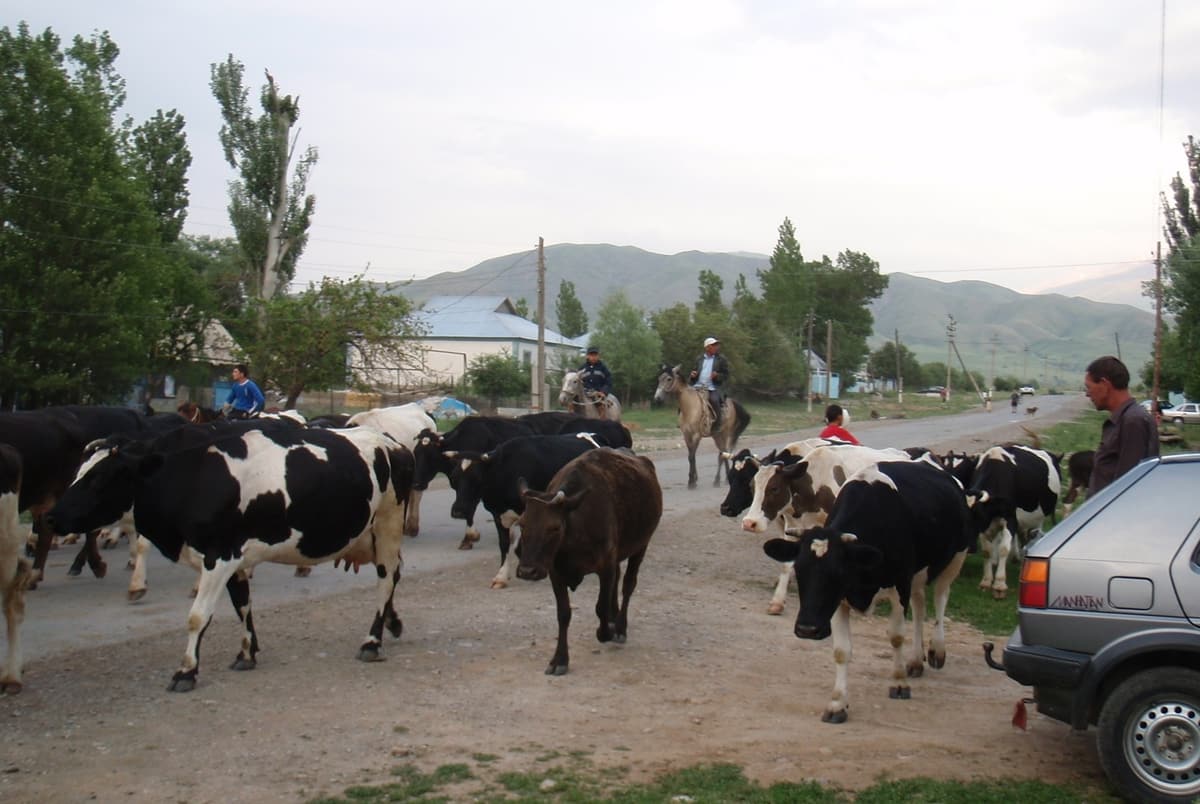
Zhabagly village has a handful of long-established family guesthouses that organise permits, rangers, horses and meals. A night or two here is a highlight in itself.
How to get to Aksu-Zhabagly Nature Reserve
- By car: Zhabagly village is about 100 km east of Shymkent, 1.5–2 hours via the Almaty highway and the turn-off near Turar Ryskulov (Vannovka).
- By train or bus: the nearest main-line station is Tulkibas (Turar Ryskulov), roughly 20 km from the village; guesthouses will collect you.
- On a tour: a day trip from Shymkent to the Aksu canyon handles transport and access; in spring there is also a multi-day tulip tour.
Insider tips
- This is a strict reserve: you need an entry permit and must be accompanied by a ranger or licensed guide. Guesthouses and tour operators arrange both; fees are charged per person per day.
- Mountain weather turns fast. Bring a warm layer and waterproofs even when Shymkent is at 30 °C.
- Tulip timing varies by a week or two from year to year — ask locally before fixing dates.
- Bring binoculars. Even non-birders enjoy the vultures and eagles over the canyon.
Best tours & tickets for Aksu-Zhabagly Nature Reserve
These experiences are the easiest way to see Aksu-Zhabagly Nature Reserve:
 Private nature trip from US$240
 From Shymkent: Aksu Canyon & Tian Shan Mountains Day Trip
A private day out to the natural side of the region: the dramatic Aksu canyon, a traditional village and a hike in the foothills of the Western Tian Shan. Pickup is available and the group stays small. A new listing, so no reviews yet.
- Viewpoint over the Aksu canyon
- A village in the foothills
- Walking in the Western Tian Shan
Multi-day tour from US$1500 Shymkent: 6-Day Tulip Bloom Tour with Hotel & Meals
A seasonal six-day journey built around the spring tulip bloom: hiking in the Aksu-Zhabagly reserve, the old city of Turkistan and the landscapes between, with accommodation and meals. Dates are limited to the flowering season; no reviews yet.
- Wild tulips in Aksu-Zhabagly
- Turkistan’s monuments
- Hotels and meals included
 Adventure from US$170
 Shymkent: Tandem Paragliding in the Western Tian Shan
A tandem flight over the foothills of the Western Tian Shan with a certified pilot. Weather decides everything in paragliding, so keep a spare day. A brand-new listing.
- Fly with a certified pilot
- No experience needed
- Photos and video included