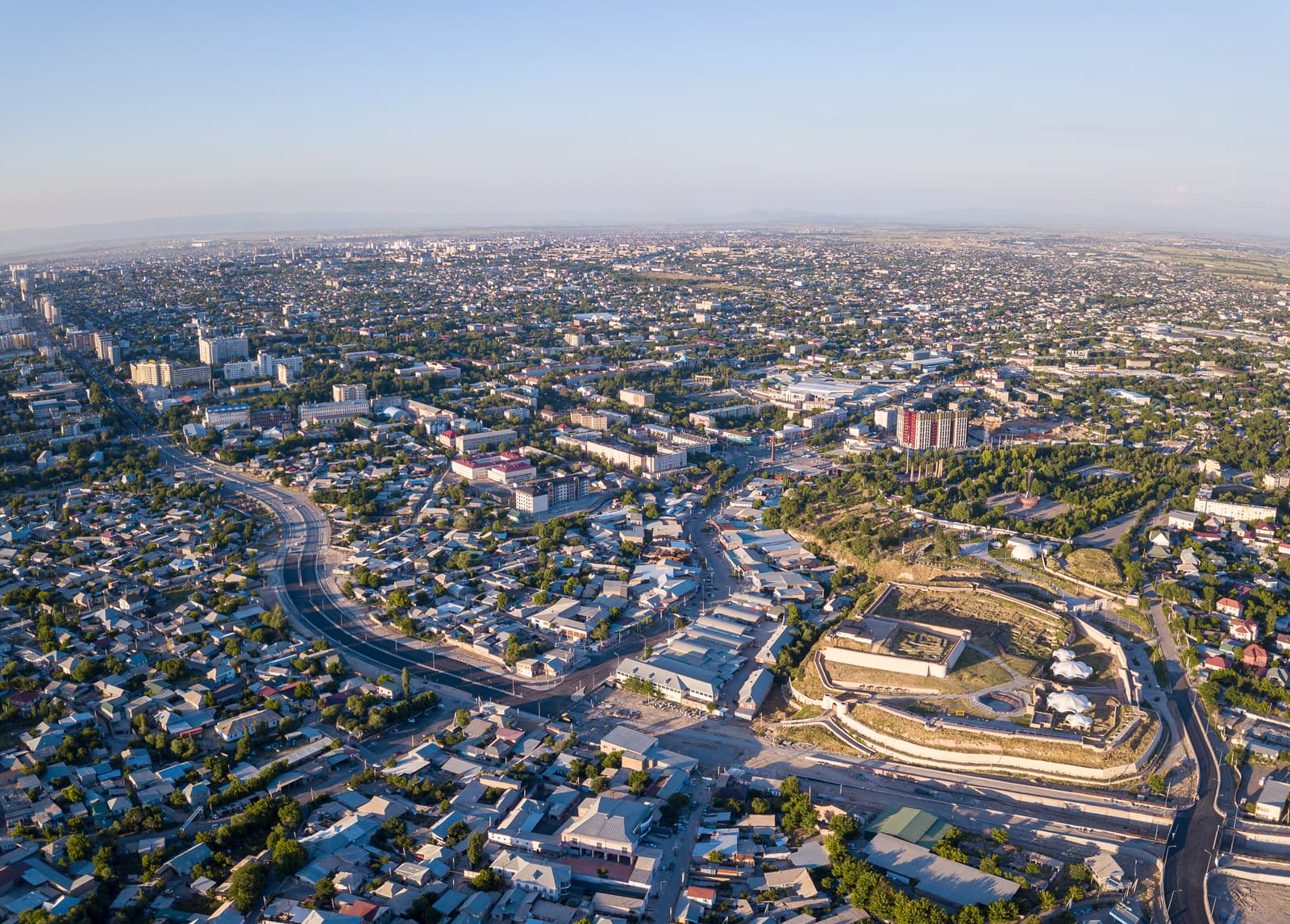
Shymkent (Шымкент; Chimkent in Soviet times) is Kazakhstan’s third city, with well over a million inhabitants, and since 2018 one of three "cities of republican significance" alongside Astana and Almaty. It is the most southern, the most traditional and — Kazakhs will tell you — the most hospitable of the three.
A short history
The city began as a fortified stop on the Silk Road protecting the approach to the much larger Sayram; excavations on the citadel hill go back some 2,200 years. It was fought over by the Mongols, Timurids, the Kazakh Khanate, the Dzungars and the khanates of Bukhara and Kokand, and was taken by Russian troops in 1864. Under Soviet rule it became an industrial centre — lead smelting, chemicals, oil refining — and a transport hub on the Turksib railway. Since independence it has grown fast, absorbing surrounding villages and rebuilding its centre with parks and squares.
The population is mostly Kazakh, with large Uzbek and Russian communities. You will hear Kazakh and Russian everywhere and Uzbek in Sayram; English is limited outside hotels, so a translation app helps.
Suggested itineraries
- One day: citadel in the morning, a museum, lunch of plov, a rest through the heat, then Ordabasy Square, Independence Park and the Arbat in the evening.
- Two days: add the full-day trip to Turkistan with Otrar and Arystan Bab.
- Three days: add the mountains — the Aksu canyon in Aksu-Zhabagly or an easy day in Kaskasu — and a morning in Sayram.
- Four days or more: sleep a night in Turkistan to see Sauran at sunset, and a night in Zhabagly village for hiking.
The places to know
 Silk Road day trips
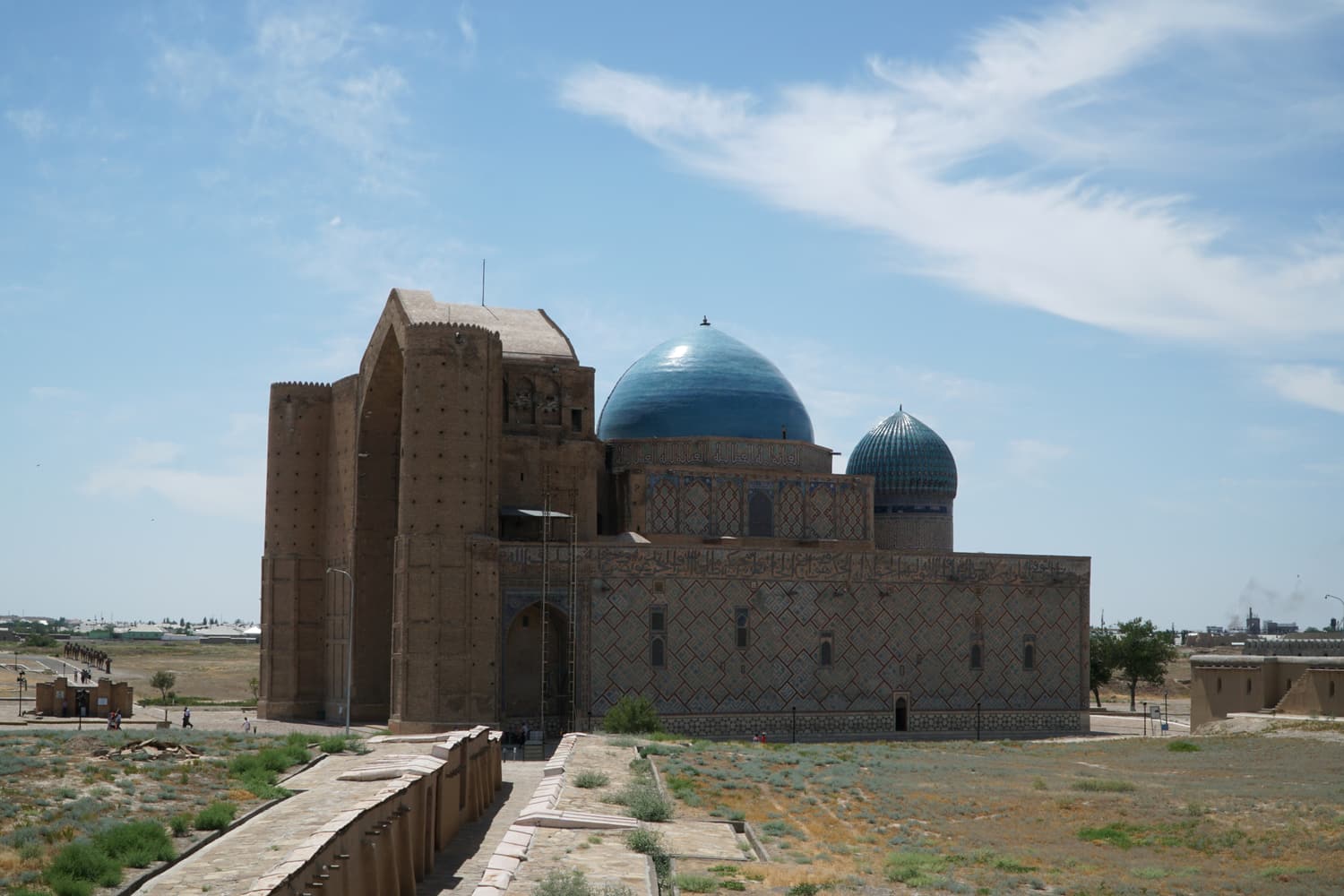
 Turkistan
Kazakhstan’s holiest city and its greatest monument
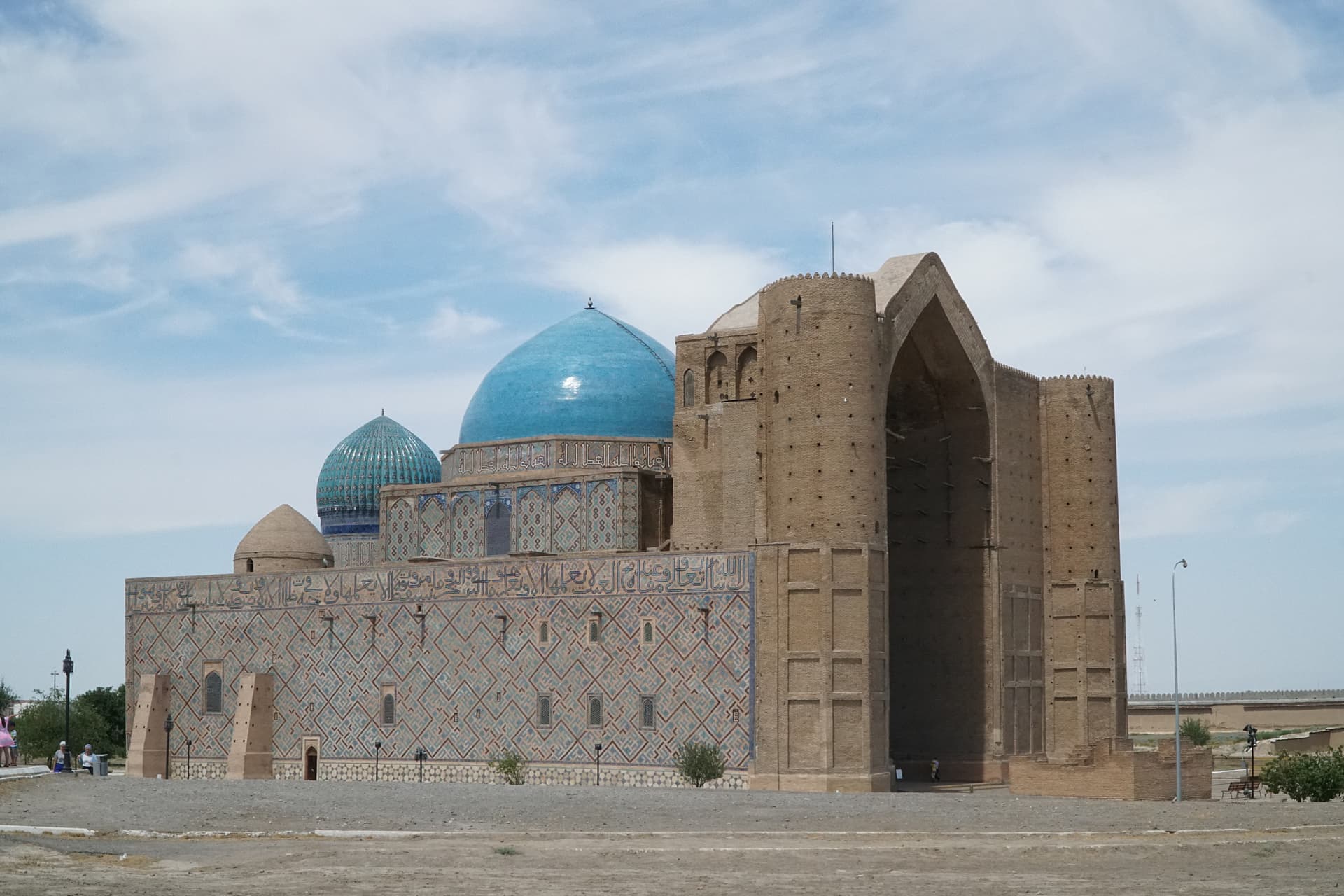
About 170 km north-west of Shymkent, Turkistan grew around the tomb of the 12th-century Sufi poet Khoja Ahmed Yasawi. The colossal turquoise-domed mausoleum that Timur ordered built over it in 1389 is a UNESCO World Heritage Site and the single must-see of southern Kazakhstan.
 In Shymkent
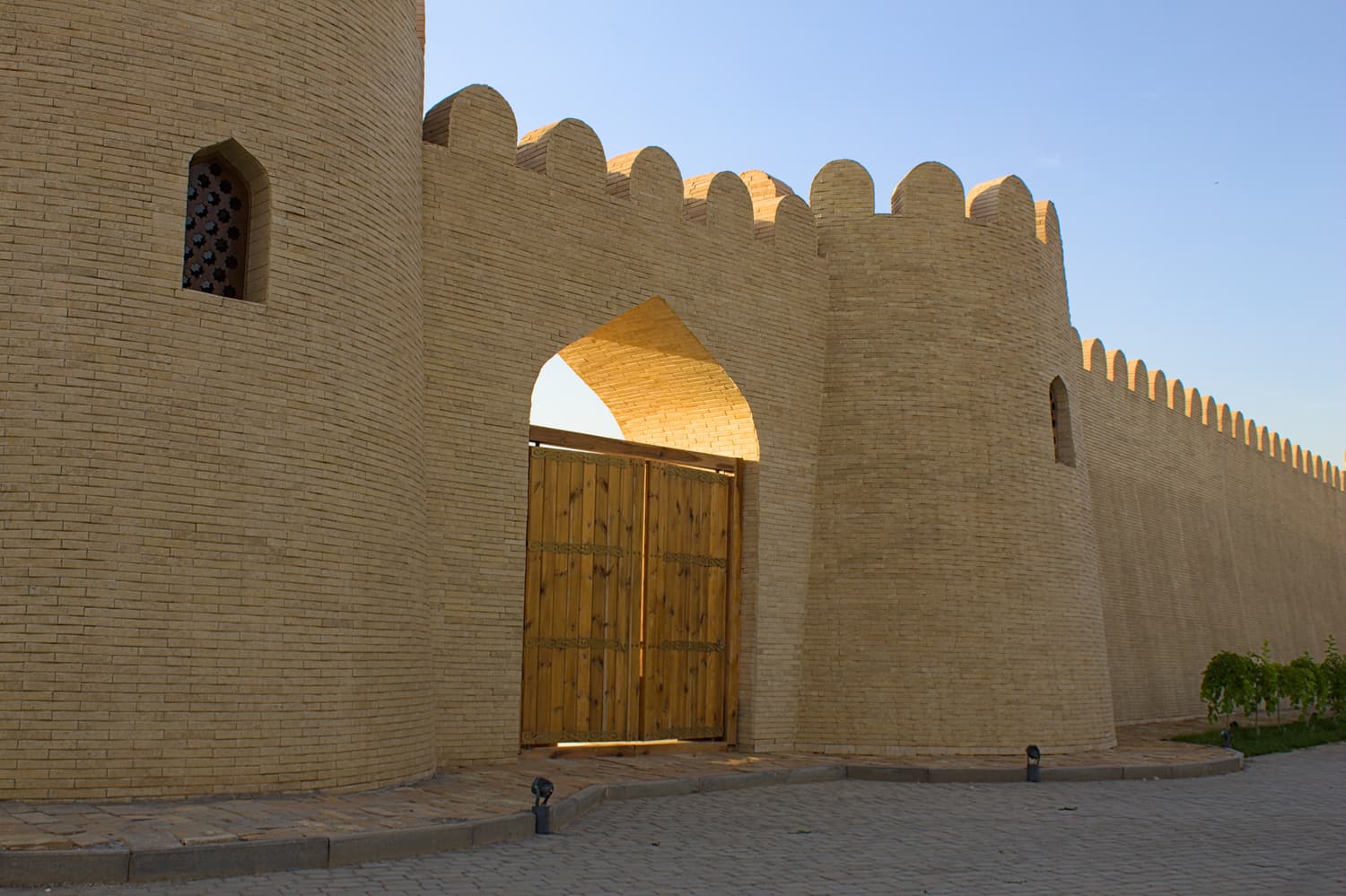
 Shymkent Citadel & Old Town
Where the city began
A hill above the Koshkar-Ata stream where the original Silk Road settlement stood. Excavations here pushed the city’s official age back to more than two thousand years, and the site has been turned into an open-air museum with rebuilt walls, gates and viewpoints.
 Mountains & reserves
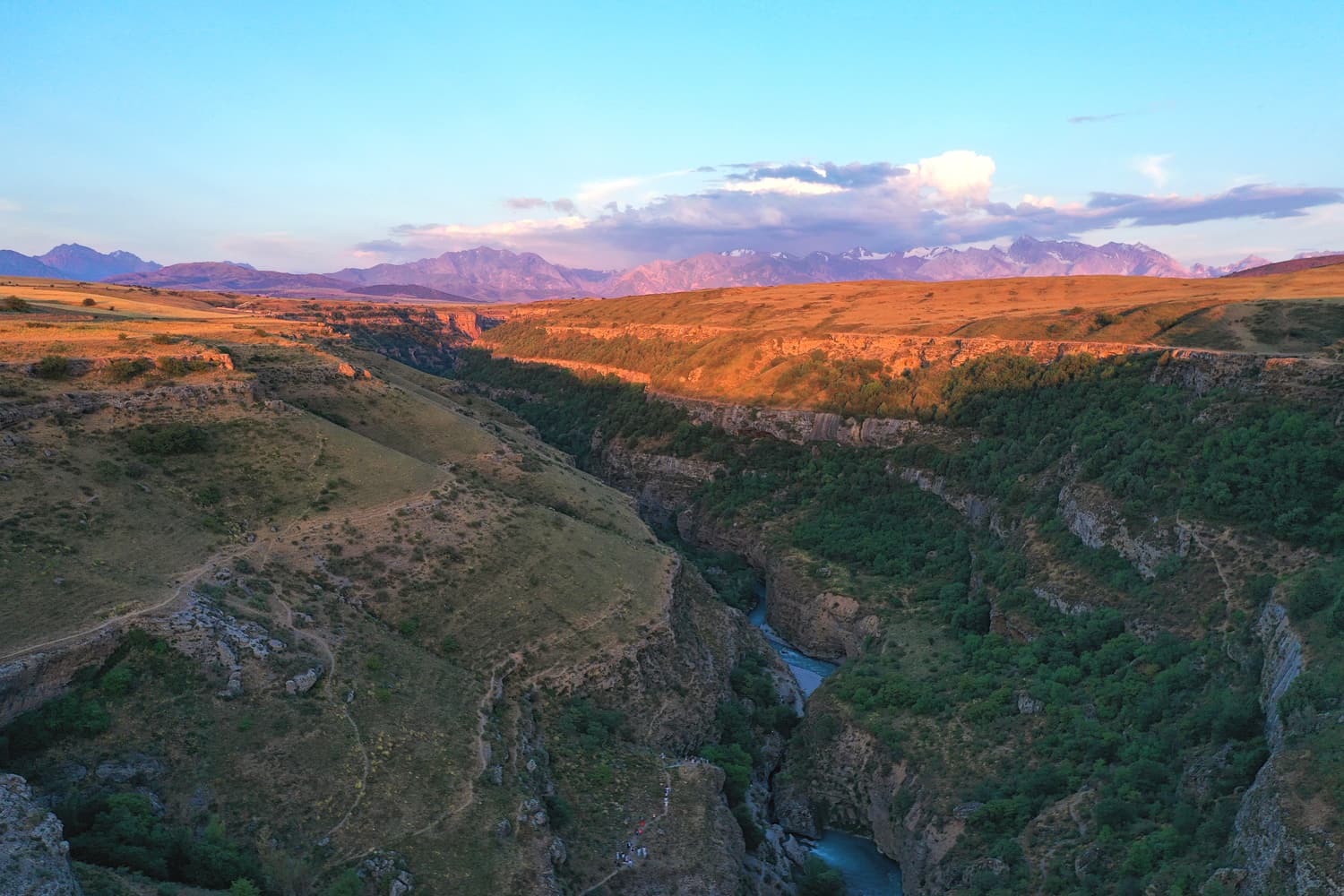
 Aksu-Zhabagly Nature Reserve
Wild tulips and a canyon in the Western Tian Shan
Central Asia’s oldest nature reserve, founded in 1926, protects the Talas Alatau range east of Shymkent. It is famous for its wild Greig’s and Kaufmann’s tulips in April and May, for the deep Aksu canyon, and for ibex, bears and a rich birdlife.
 Silk Road day trips
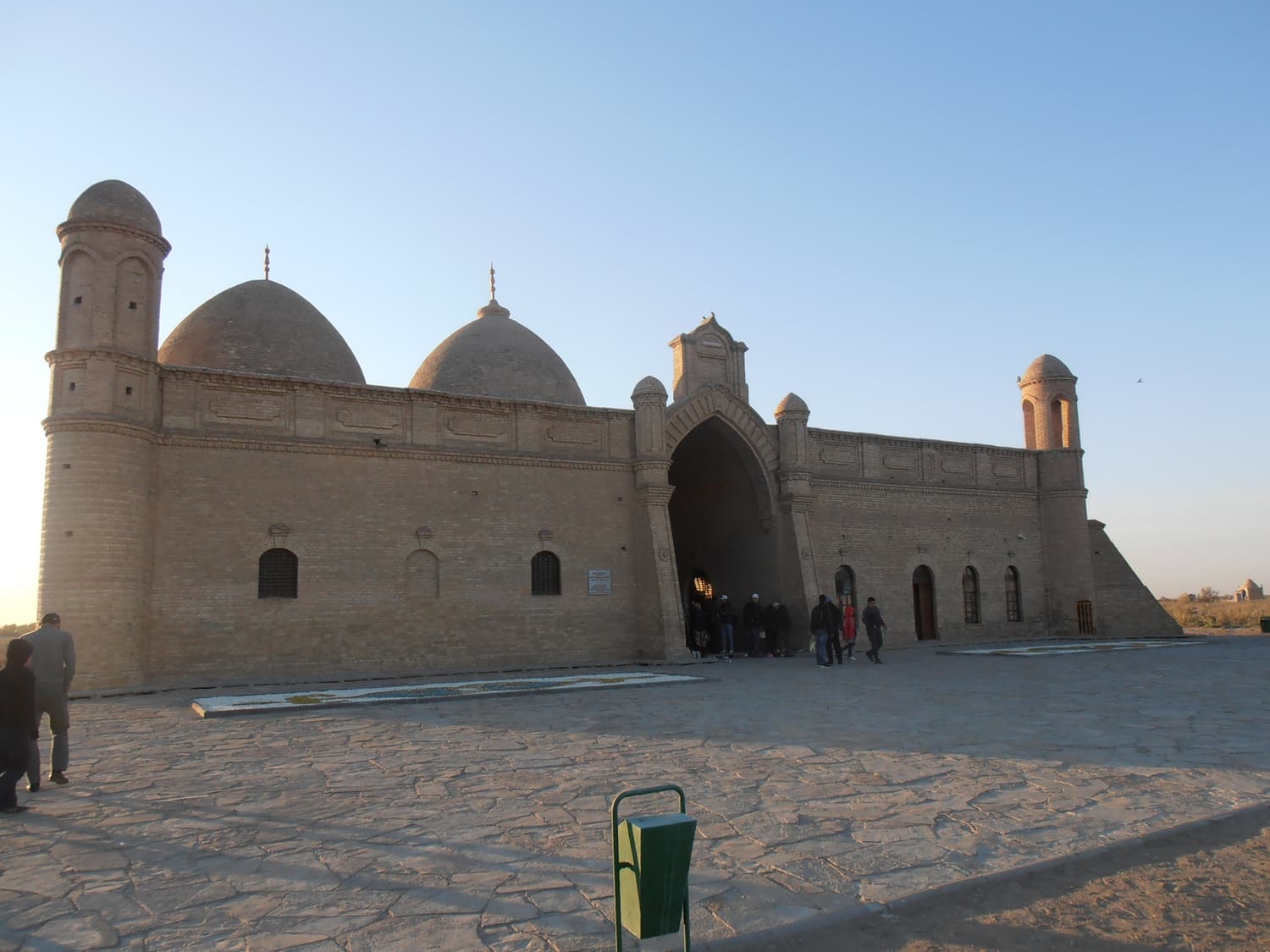
 Otrar & Arystan Bab
The city that brought the Mongols west
The mud-brick ruins of Otrar — the medieval Farab, home region of the philosopher al-Farabi — mark the spot where the killing of Genghis Khan’s envoys in 1218 triggered the Mongol invasion of Central Asia. Nearby stands the mausoleum of Arystan Bab, the teacher of Yasawi.
Food and drink
Shymkent is Kazakhstan’s food capital, with strong Uzbek influence and prices well below Almaty’s.
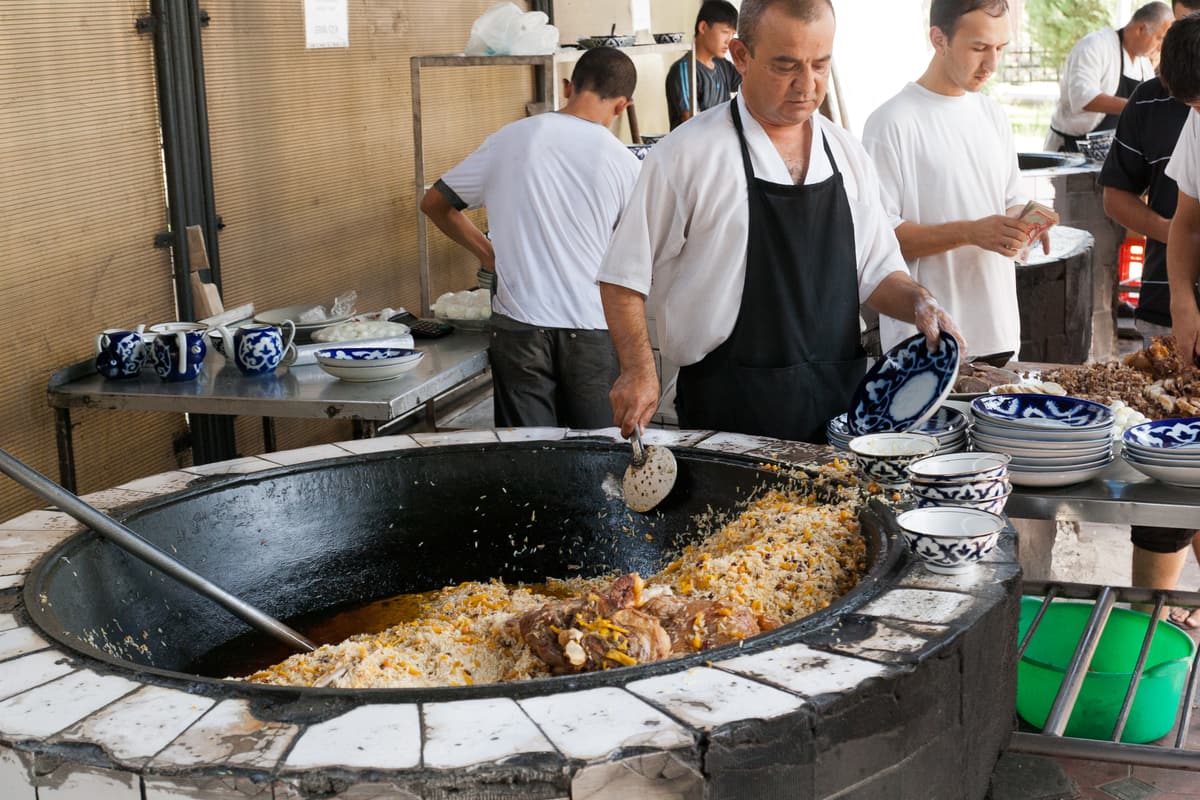
- Plov (palau): rice with lamb, yellow carrots and chickpeas, cooked in a huge kazan and best at lunchtime, before it runs out.
- Shashlik: skewers of lamb, beef, chicken or liver grilled over saxaul or fruitwood charcoal — a point of local pride.
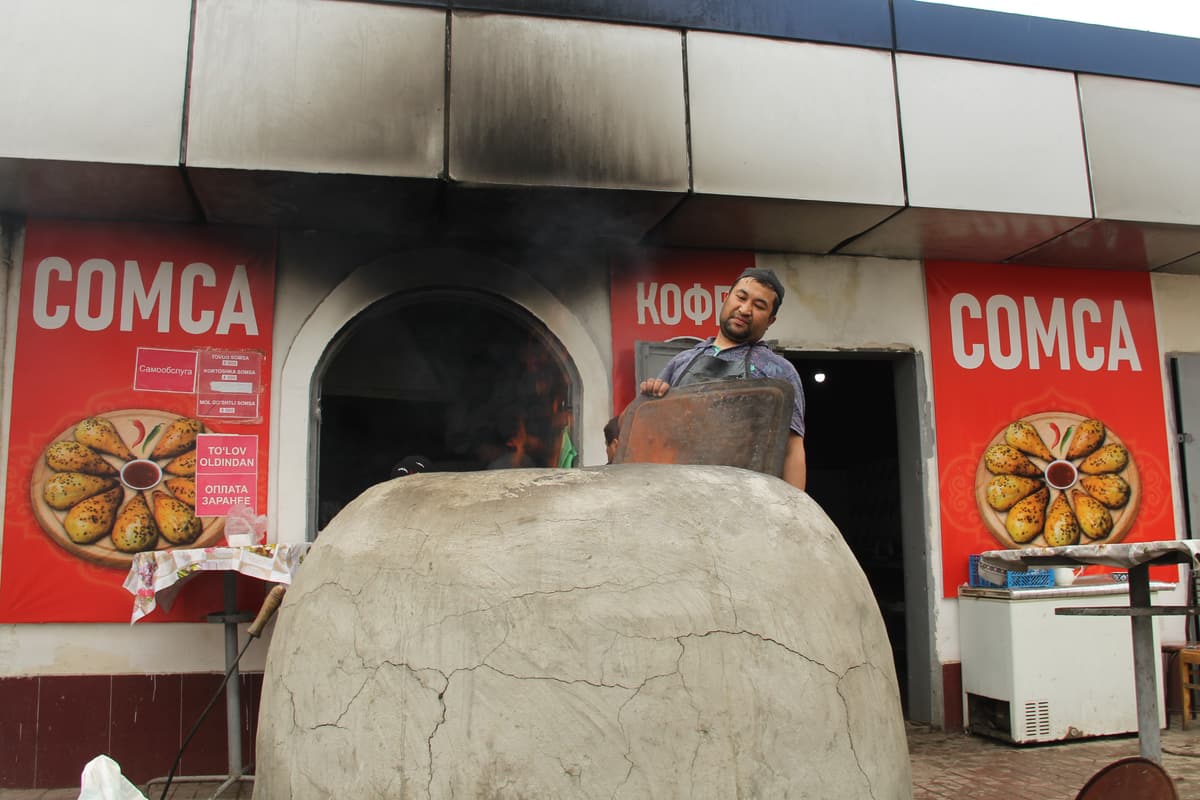
- Samsa: flaky pastries of meat and onion (or pumpkin in autumn) baked on the wall of a tandoor.
- Also try: lagman noodles, manty dumplings, kazy (horse sausage), beshbarmak, fresh tandoor bread and the excellent local melons and grapes in late summer.
- To drink: green tea with everything; kymyz (fermented mare’s milk) and shubat (camel’s milk) in season; and Shymkent beer, the country’s best-known brew, on draught.
Bazaars and shopping
Markets are central to life here, selling dried fruit, nuts, spices, kurt (dried cheese balls), bread and household everything. Shymkent’s big bazaars have been moved and rebuilt more than once in recent years, so ask your hotel which market is most convenient now. Bargaining is normal for non-food goods, gentle for food. For souvenirs look for felt work, embroidered skullcaps and dried fruit.
Money
The currency is the tenge (KZT). ATMs are everywhere and cards are accepted in hotels, supermarkets and most restaurants; locals pay for almost everything by Kaspi QR code, which visitors generally cannot use, so keep some cash for markets, minibuses and village guesthouses. Exchange offices take dollars, euros, roubles and Uzbek som. Shymkent is inexpensive by international standards — check current exchange rates before you travel rather than relying on old figures.
Safety, health and etiquette
- Shymkent is generally safe for visitors. Use app taxis at night and watch your belongings in crowded markets.
- The main health risk is the summer heat: drink plenty, wear a hat, and plan sightseeing for mornings and evenings.
- Tap water is best avoided; bottled water is cheap.
- The south is more conservative than Almaty. Dress modestly at shrines and mosques, and accept tea when it is offered — refusing is impolite.
- Carry your passport or a copy; police may ask for ID, especially near borders.
Connectivity and time
Local SIM cards (Beeline, Kcell/Activ, Tele2/Altel) are cheap and sold with a passport; eSIMs also work. Wi-Fi is standard in hotels and cafés. All of Kazakhstan has used a single time zone, UTC+5, since 2024 — the same as Tashkent.